
Understand how kese scrub and foam massage work together inside a Turkish bath ritual, and why the order matters for comfort and skin freshness.
Kese is not a normal body scrub
Traditional kese exfoliation is one of the main reasons visitors choose a Turkish hammam instead of a simple spa appointment. The kese mitt removes surface buildup after the body has been warmed by steam, water and marble heat. When done with the right pressure, the skin feels cleaner without making the guest uncomfortable.
The important detail is preparation. A kese scrub should not feel like a dry scrub on cold skin. The heat phase comes first because it makes the process smoother and easier to receive.
Why foam massage comes after the scrub
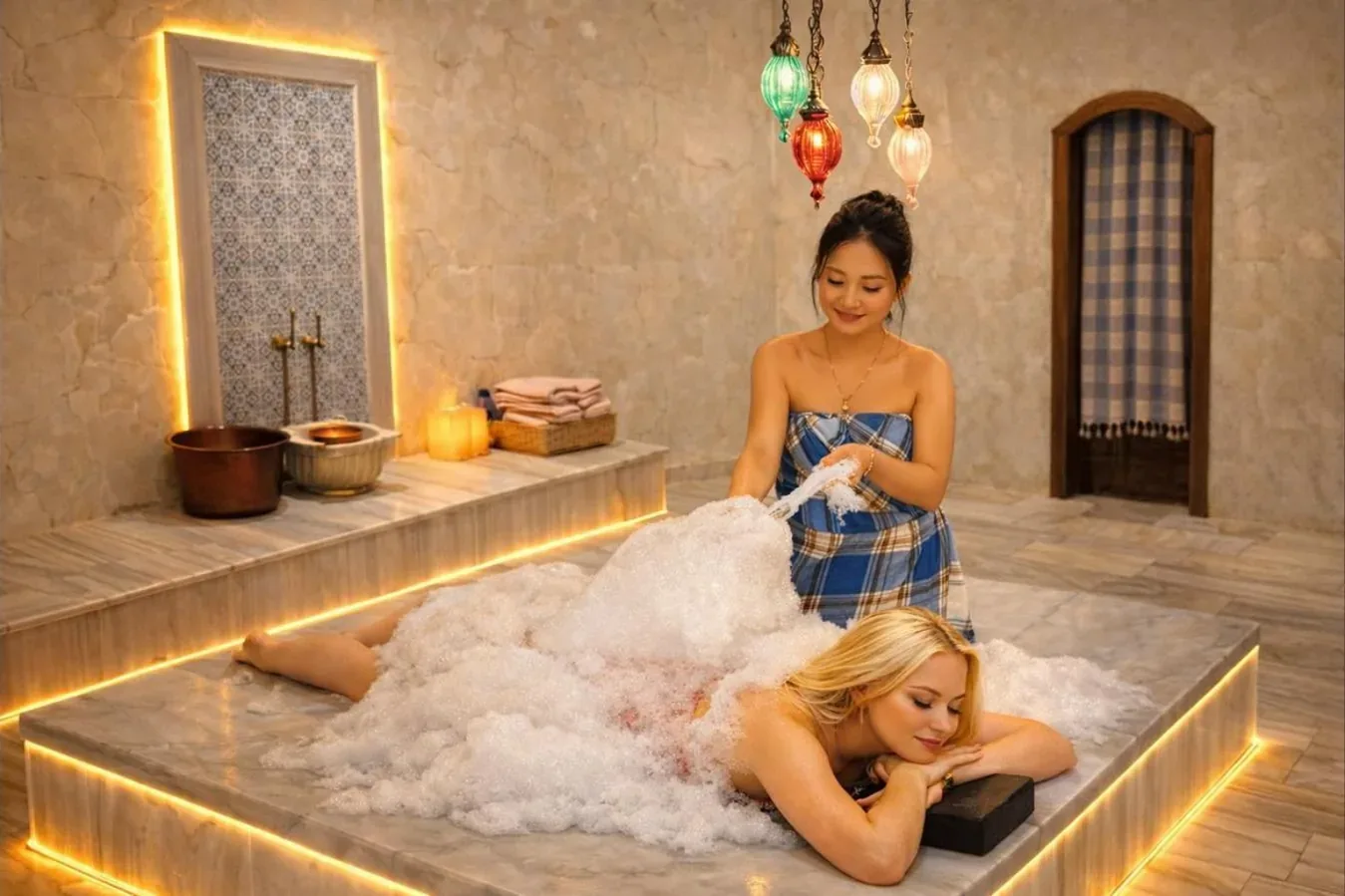
Foam massage is the softer part of the ritual. After the kese, the body is rinsed, then covered with rich warm foam. The movement is usually calmer than an oil massage and works more like a traditional wash, light massage and relaxation moment together.
This order makes sense for both comfort and hygiene. First the skin is prepared and exfoliated; then the foam massage gives the guest a clean, light and relaxed finish before optional oil massage or facial clay mask.
How guests should choose pressure
Not every guest wants the same kese pressure. Some visitors expect a strong scrub, while others prefer a gentle traditional experience. The best approach is to mention sensitive skin, sunburn, recent waxing or any discomfort before the ritual begins.
A professional hammam page should explain this clearly. It helps visitors trust the service and reduces confusion at the appointment.